

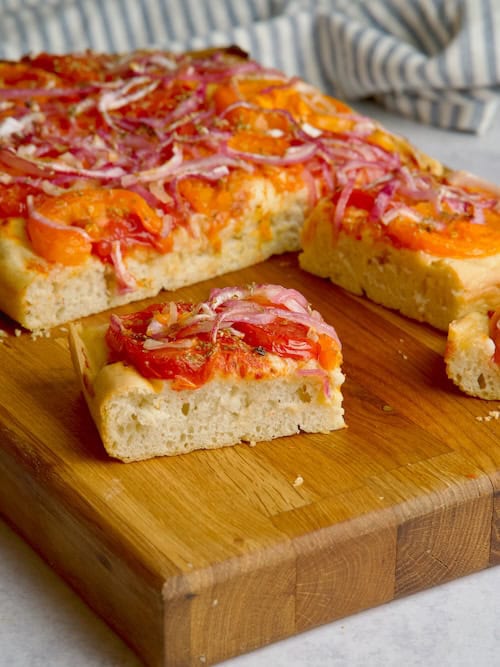
Ladenia comes from the Greek island of Kimolos, but it’s loved all across Greece. It’s similar to focaccia, with a soft, fluffy dough base. Traditionally, it’s topped with sliced tomatoes and onions, a generous drizzle of olive oil, and a sprinkle of oregano for that unmistakable summer aroma. You can also add your favorite Mediterranean ingredients, like olives, peppers, or capers, if you’d like to switch it up.
Jump to:
Why you should try my recipe
- No complicated and difficult to find ingredients needed to make this humble but delicious Greek flatbread.
- Step-by-step instructions and photos to prepare the dough base.
- Great for snacking or as a light lunch.
- Can be served in family gatherings, barbecues and picnics.
Ingredients & How-to
To make this Greek ladenia flatbread we are going to need bread flour, yeast, salt, sugar, olive oil and water for the base. For the toppings we need tomatoes, onion, olive oil, oregano, tomato paste and salt.
- Bread flour: I’m using high-protein flour (bread flour) that is going to make the Greek flatbread soft and rise nicely. You could also use all-purpose flour but the base might be a little bit more dense.
- Yeast: I’m using active dry yeast but you could also use instant yeast skipping the first step of activating the yeast.
- Sugar: I add a little bit of sugar to help with the yeast. You could substitute it with honey if you prefer.
- Tomatoes: You could use grape tomatoes or beef tomatoes. I like to use heirloom to add different colors.
- Tomato Paste: This is optional but it gives a strong tomato flavor to the base and some sweetness.
- Onion: I’m using a medium red or yellow onion. Roasted red onion has a slightly sweeter flavor, so I prefer to use it when I have one in my pantry.
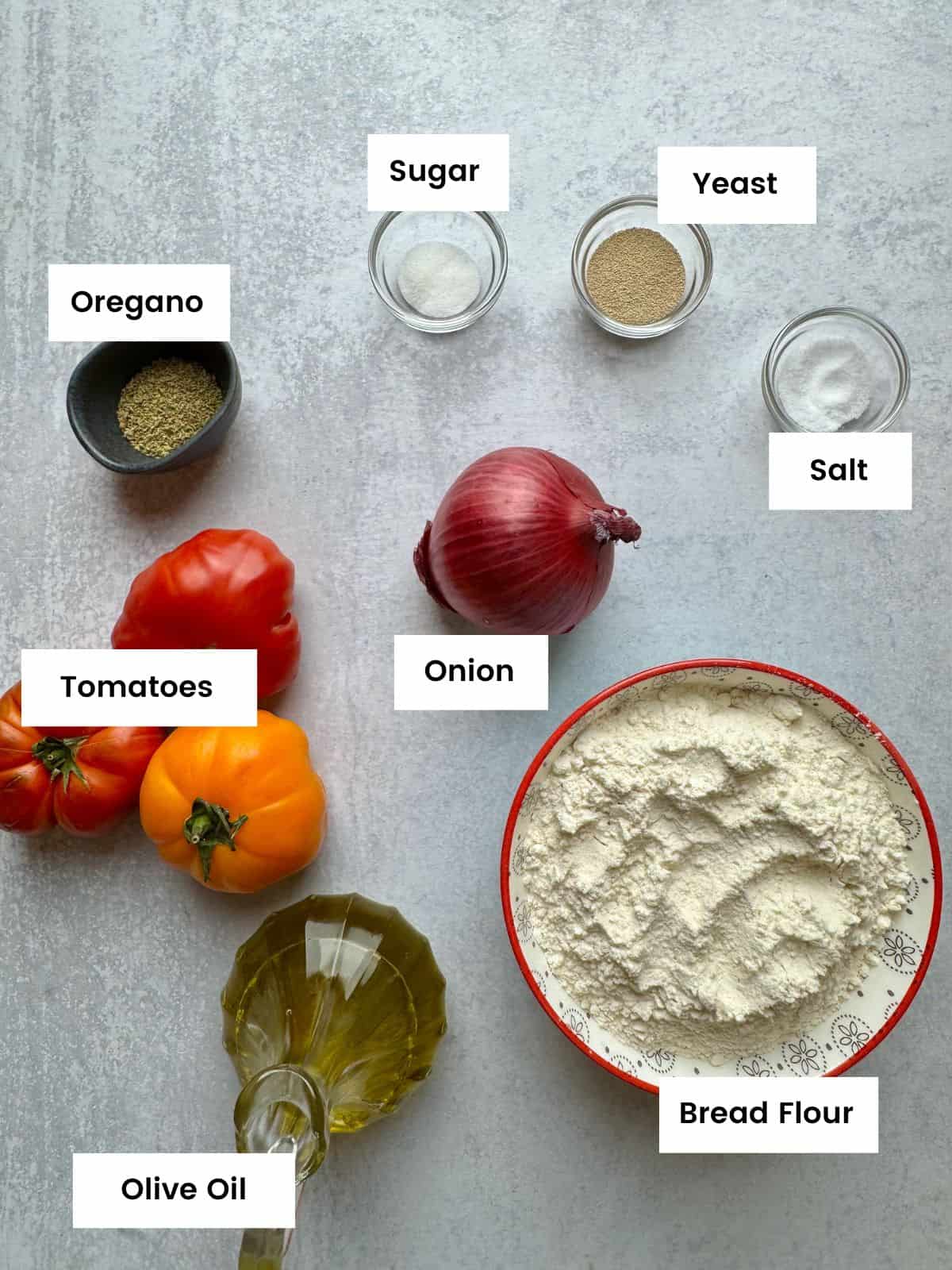
For full quantities check the recipe card down below.
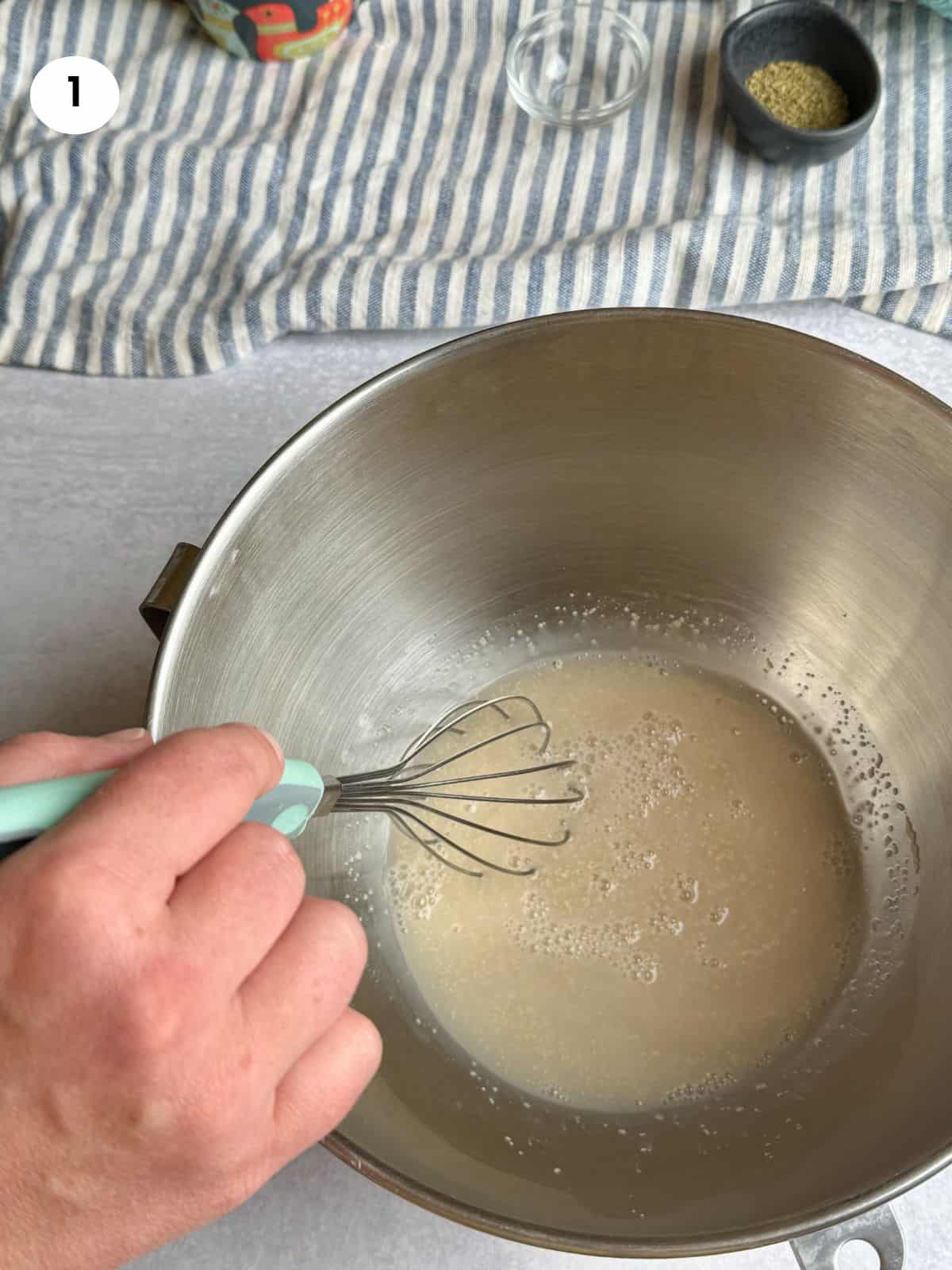
01. I start with activating the yeast. In a bowl, I add the yeast, sugar and lukewarm water. Be extra careful with the temperature of the water as if it’s too hot it will kill the yeast. It should be warmer than your body temperature when you dip your hand in. If you have a thermometer, it should be at 105℉–115℉ temperature or 40-45°C.
02. I cover the bowl with some cling film and let it rest for 10 minutes. The surface should become slightly foamy, that’s a sign that the yeast has been activated.
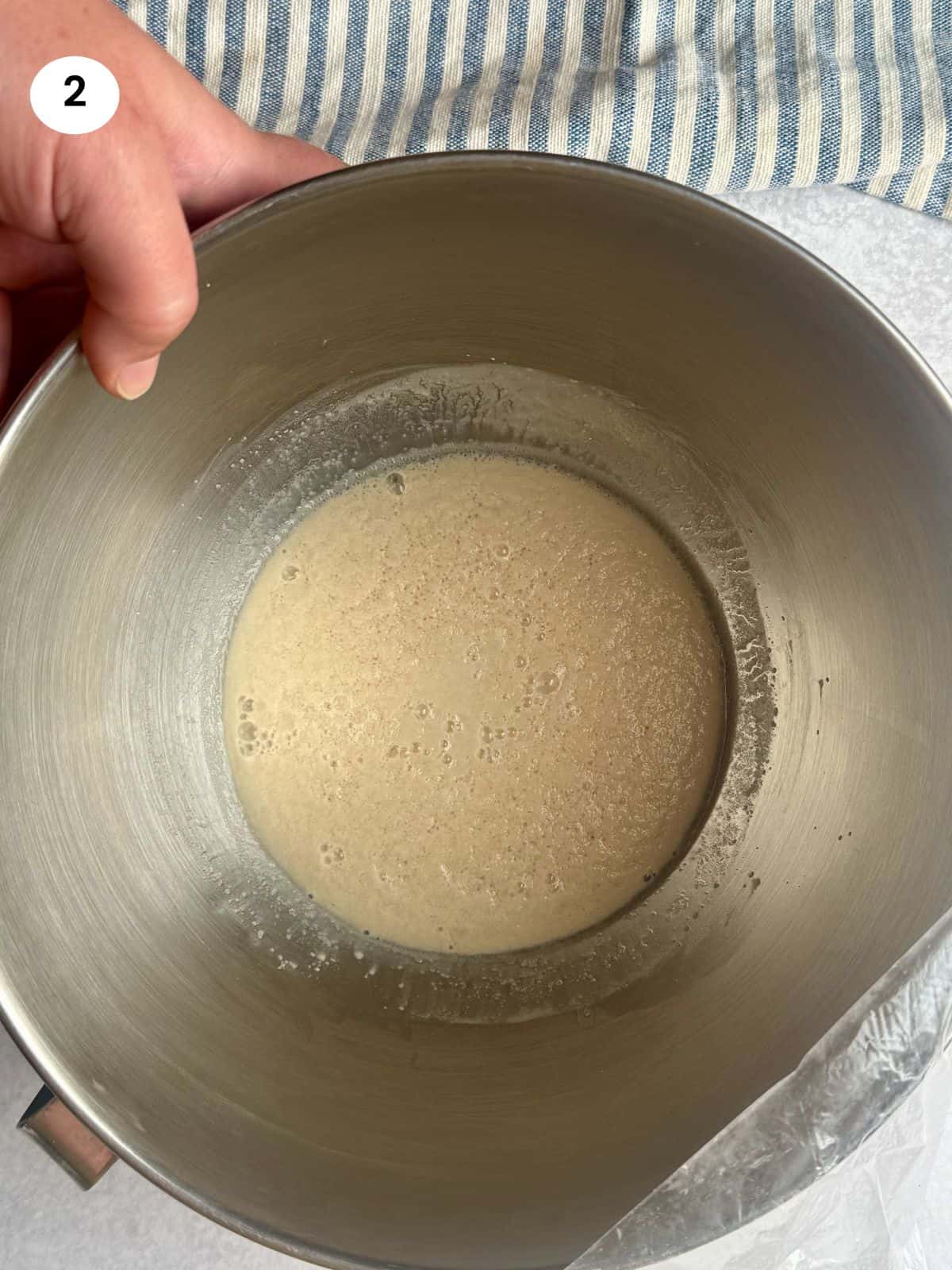
03. Next, I add the flour, salt and olive oil to the bowl. If you have a stand mixer with a hook for dough, it’s much easier. Otherwise, you could knead the dough by hand.
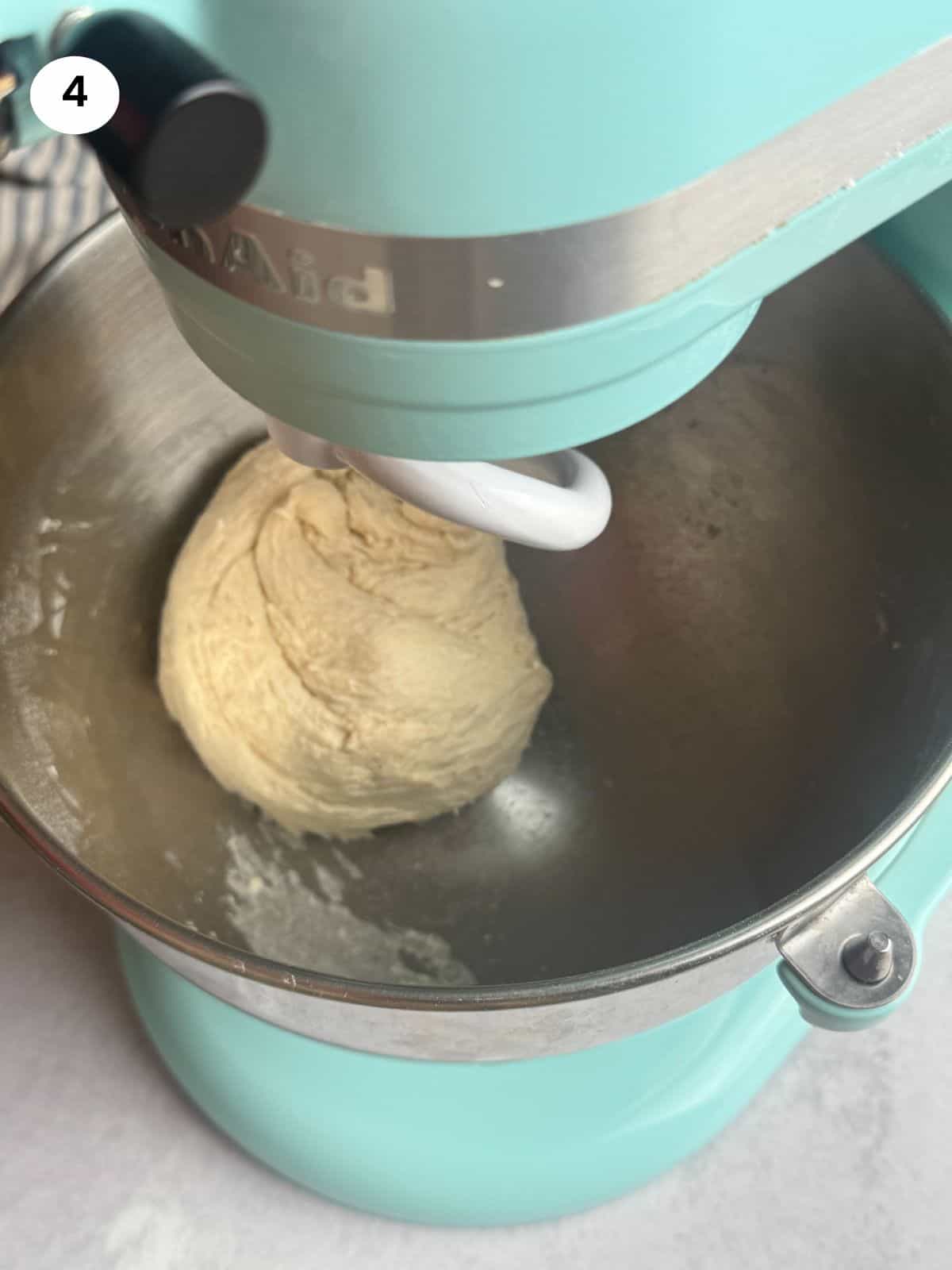
04. I knead the dough on medium-low speed for 5–6 minutes. You’ll notice it starting to come together around the hook and becoming more elastic. If there’s any flour left on the sides, use a spatula or dough scraper to push it down so it incorporates into the dough.
If kneading the dough by hand, lightly oil your hands to prevent sticking, and knead for 6–7 minutes until the dough becomes smooth and elastic.
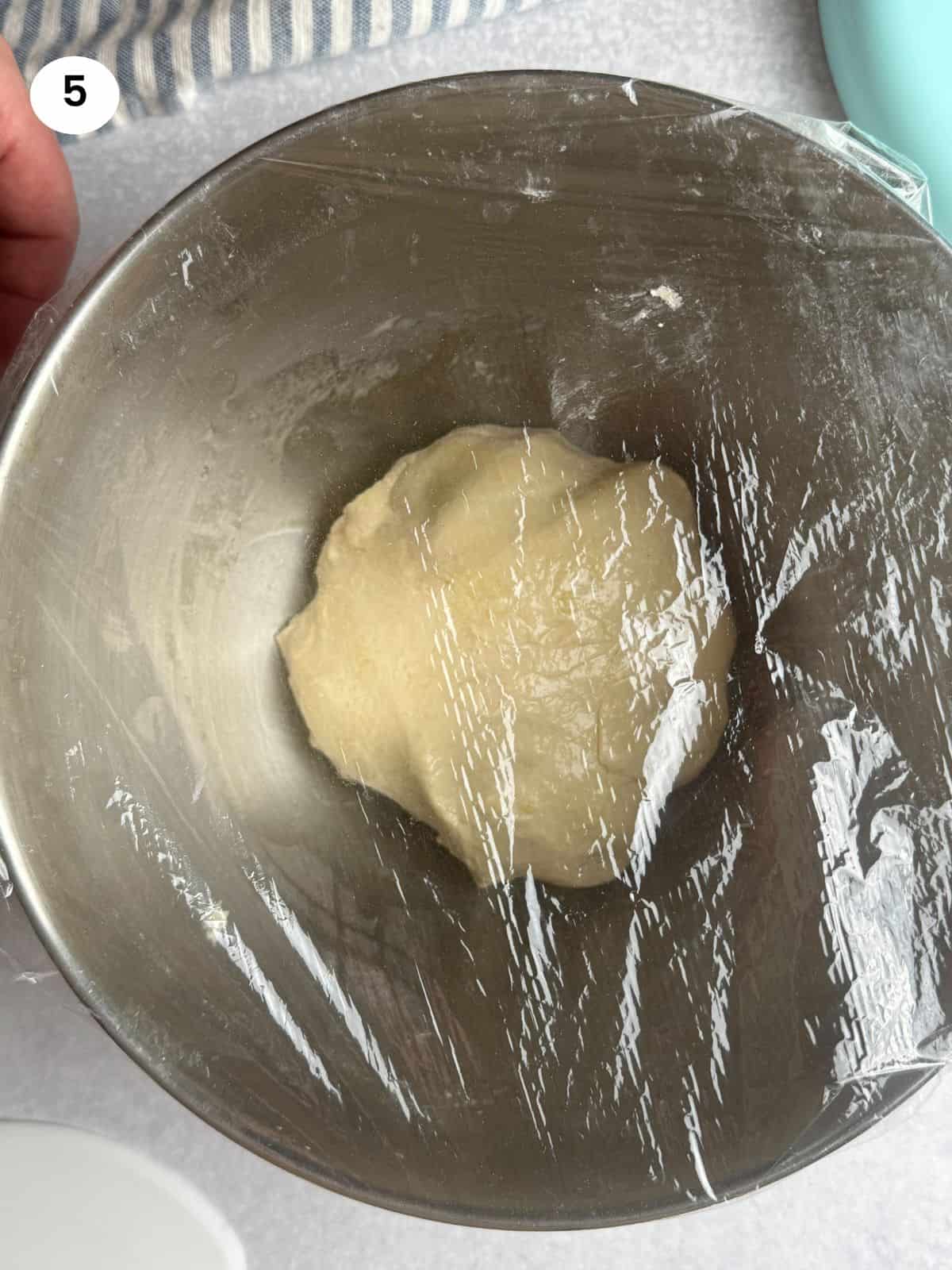
05. Now it’s time to let the dough rest and double in size. I lightly oil the bowl and place the dough ball in. I cover with cling film to keep the humidity inside and cover with a clean tea towel.
06. On a warm day, you can simply leave the bowl in a warm corner of your kitchen and let the dough rise for a couple of hours. On colder days, turn the oven on for 1–2 minutes at 200°F, then switch it off. Place the bowl inside and let the dough rise in the gentle warmth.
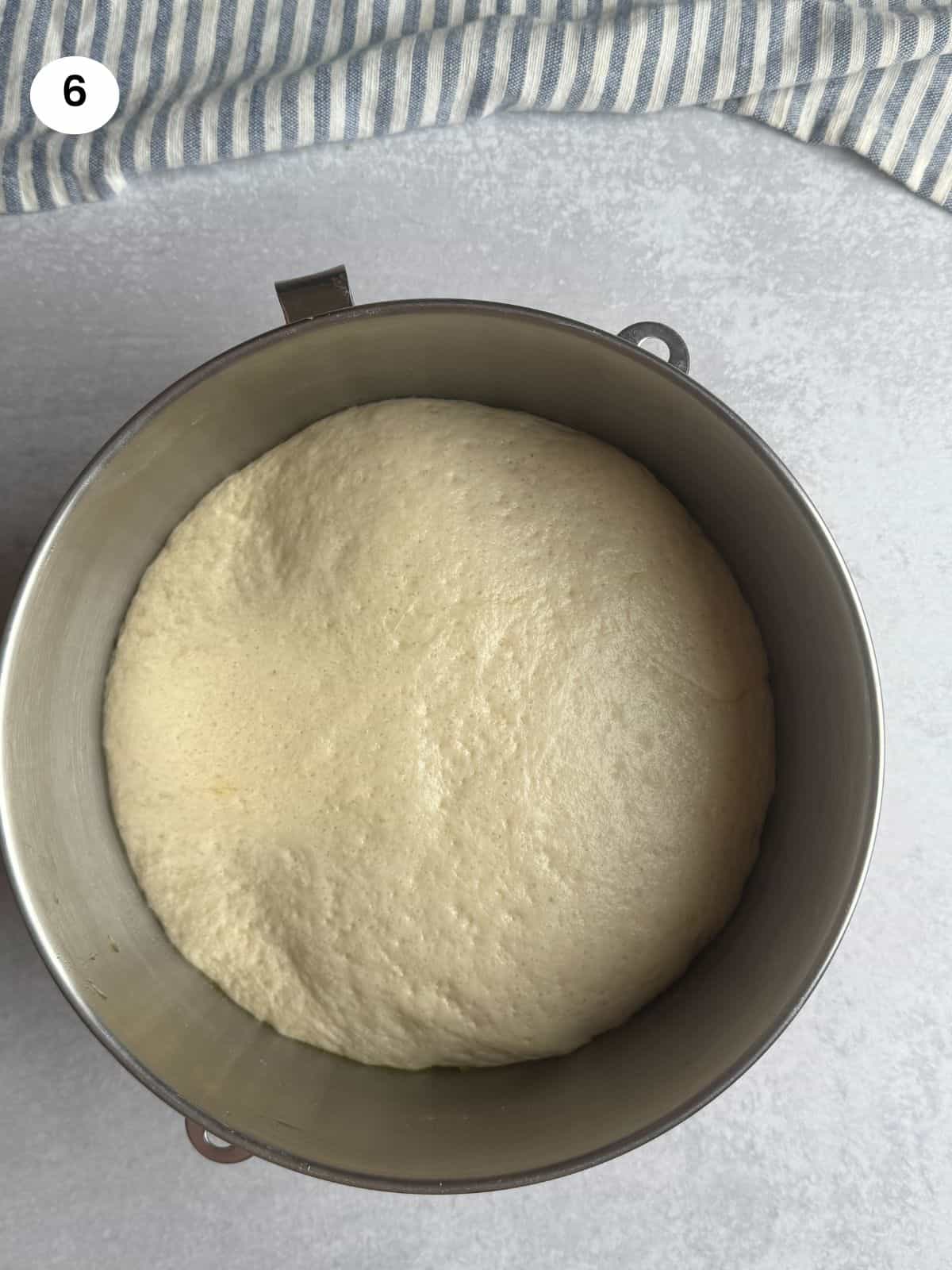
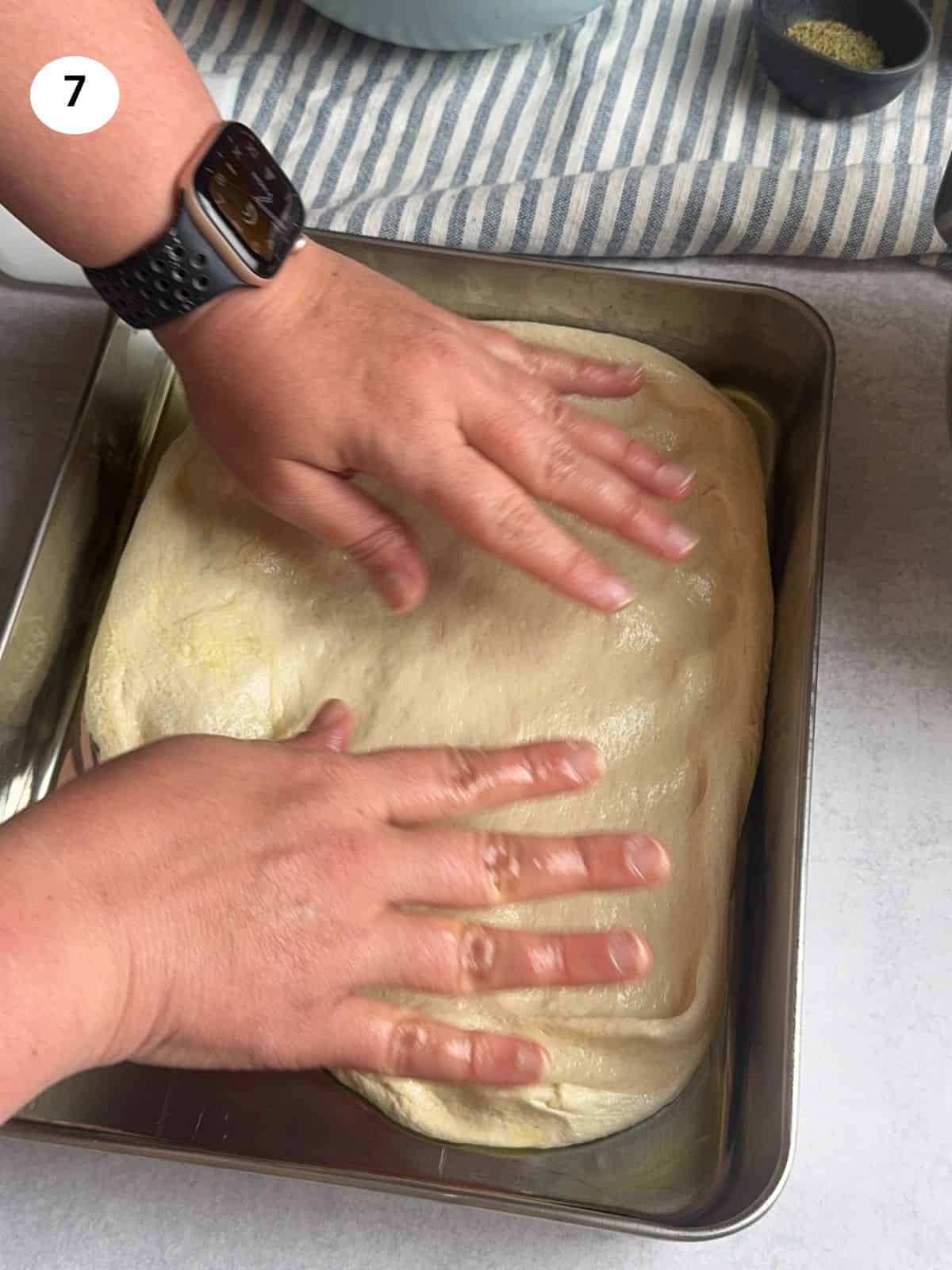
07. When the dough is ready, I gently press it down to deflate it and transfer it to an oiled tray. I’m using a 12×10-inch tray, but you can use a slightly larger one if you prefer a thinner flatbread. Then, I press the dough out with my fingers to spread it evenly across the tray.
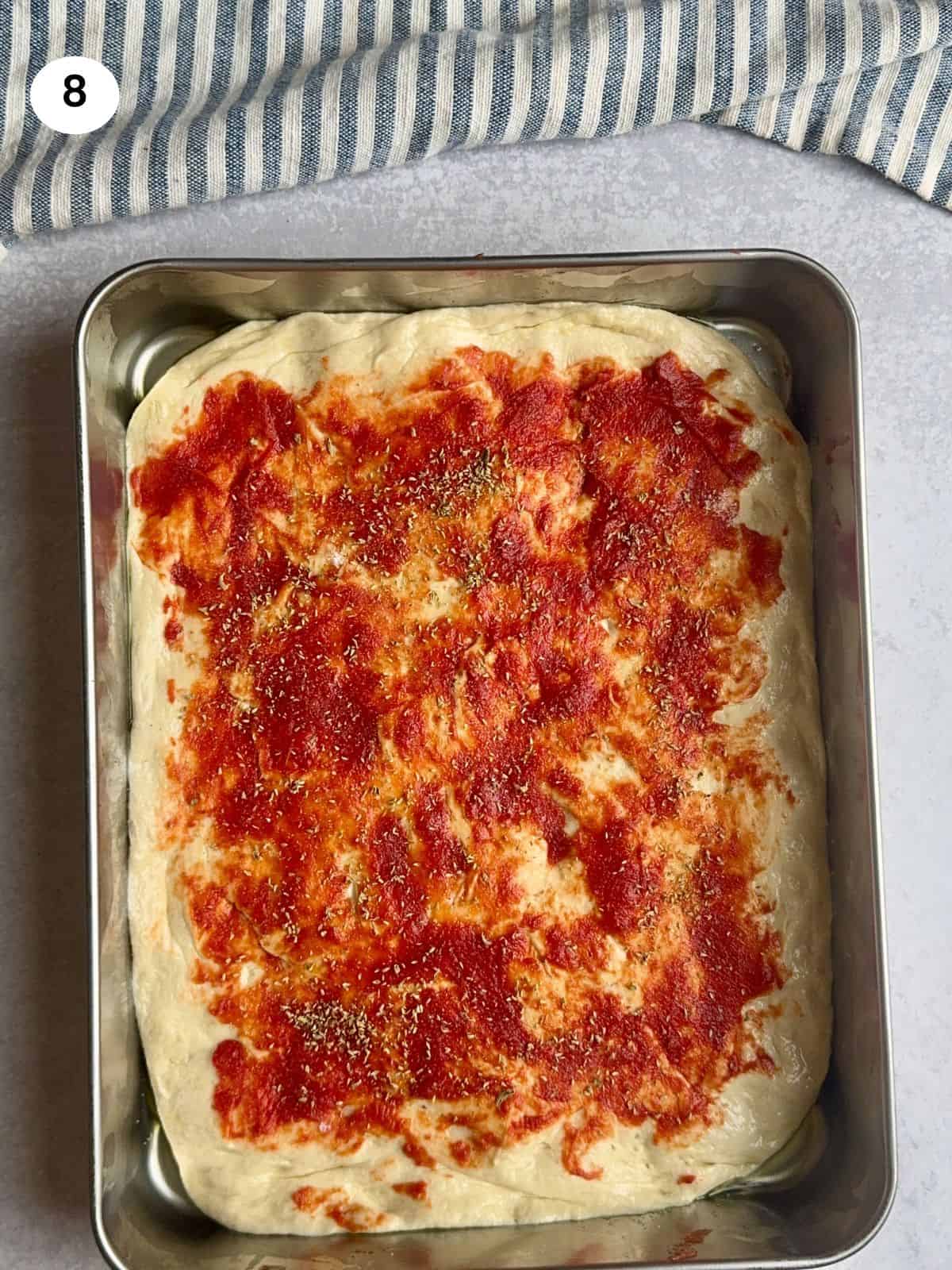
08. Next, I spread the tomato paste on top using the back of a spoon and sprinkle some salt and oregano on top.
Mamazilla's Product Recommendations

Good quality baking pans that come in two sizes. I love the small one for baking Greek cakes and baklava, and the large one for roasts and casseroles.
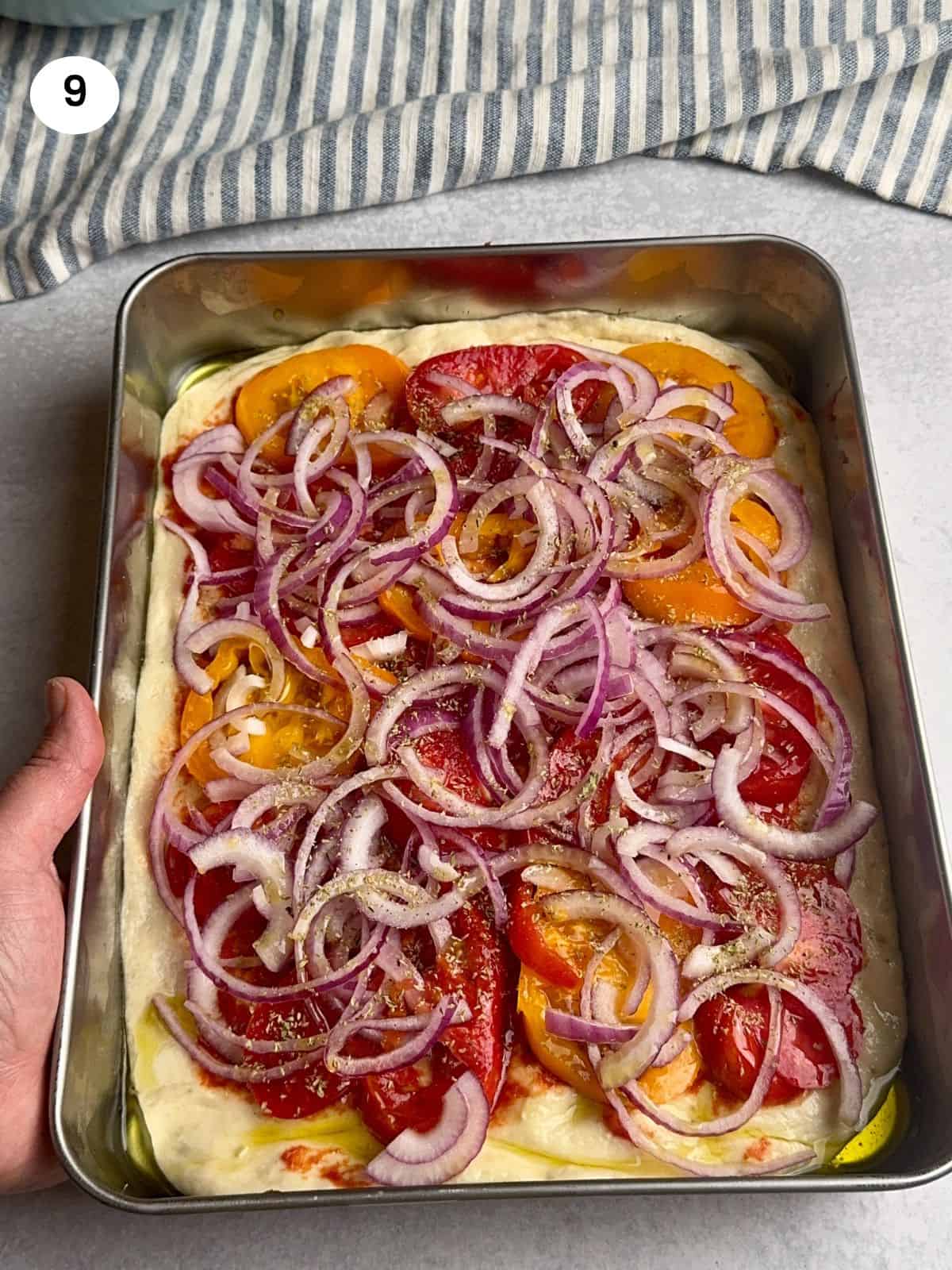
Buy On Amazon09. I slice the tomatoes and onion thinly and arrange them over the tomato paste. I’m using a small red onion and 2–3 small tomatoes, but you can also use grape tomatoes if you prefer. I drizzle with some more olive oil and sprinkle some salt and oregano before placing the tray in the oven.
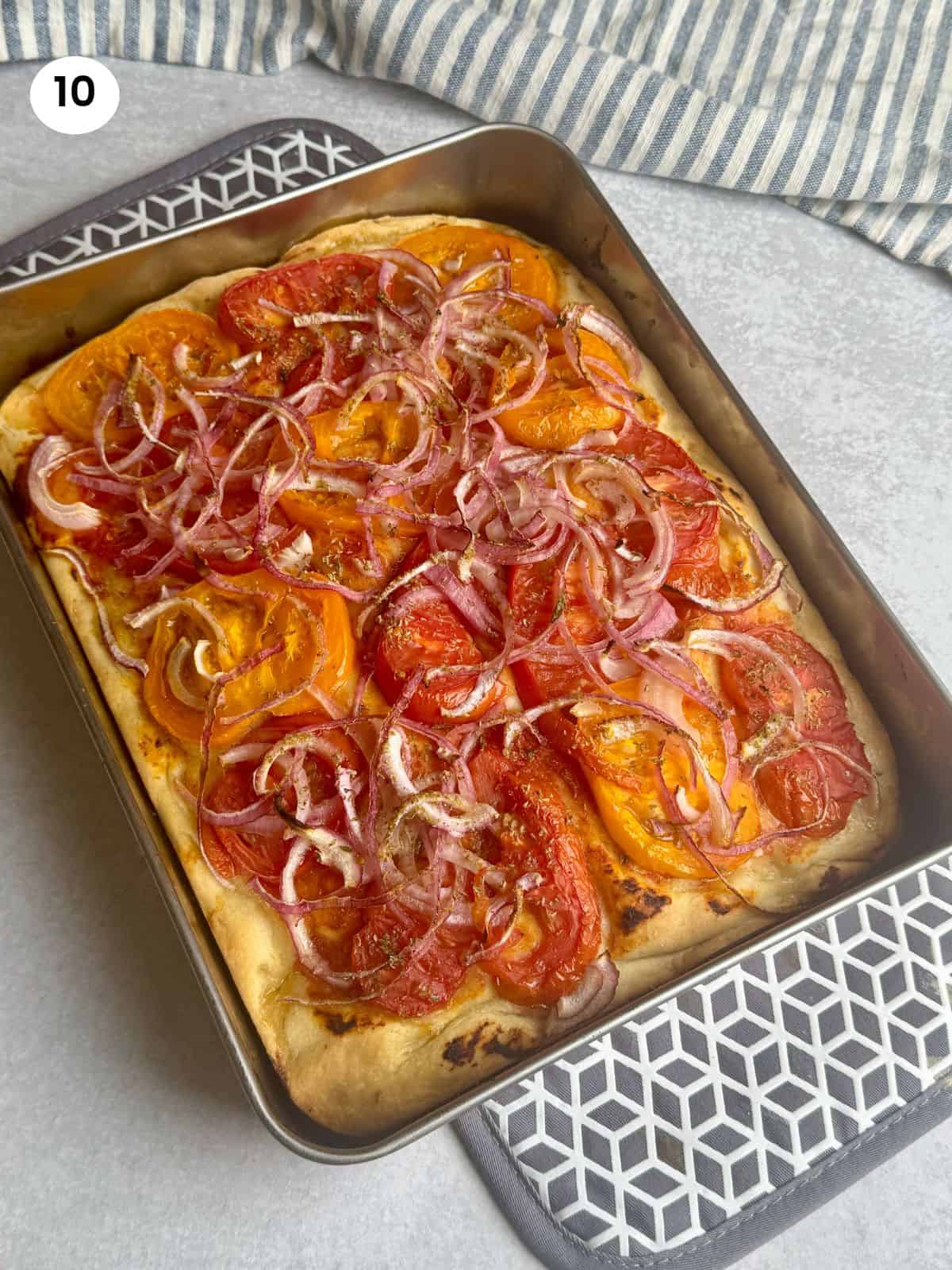
10. It takes about 30–40 minutes to get a nice golden-brown crust. Once baked, remove the ladenia from the tray and place it on a wire rack or wooden board to prevent the bottom from becoming soggy.
Serving suggestions
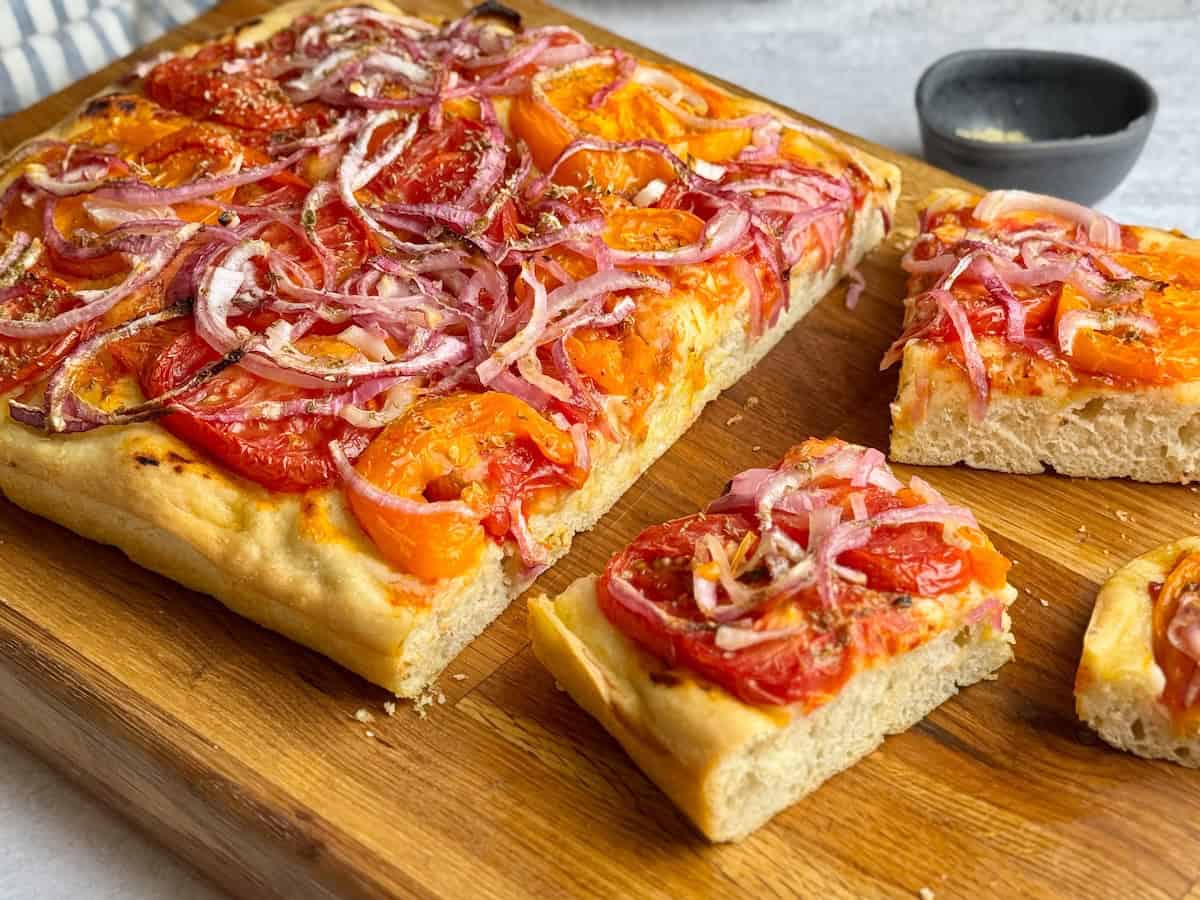
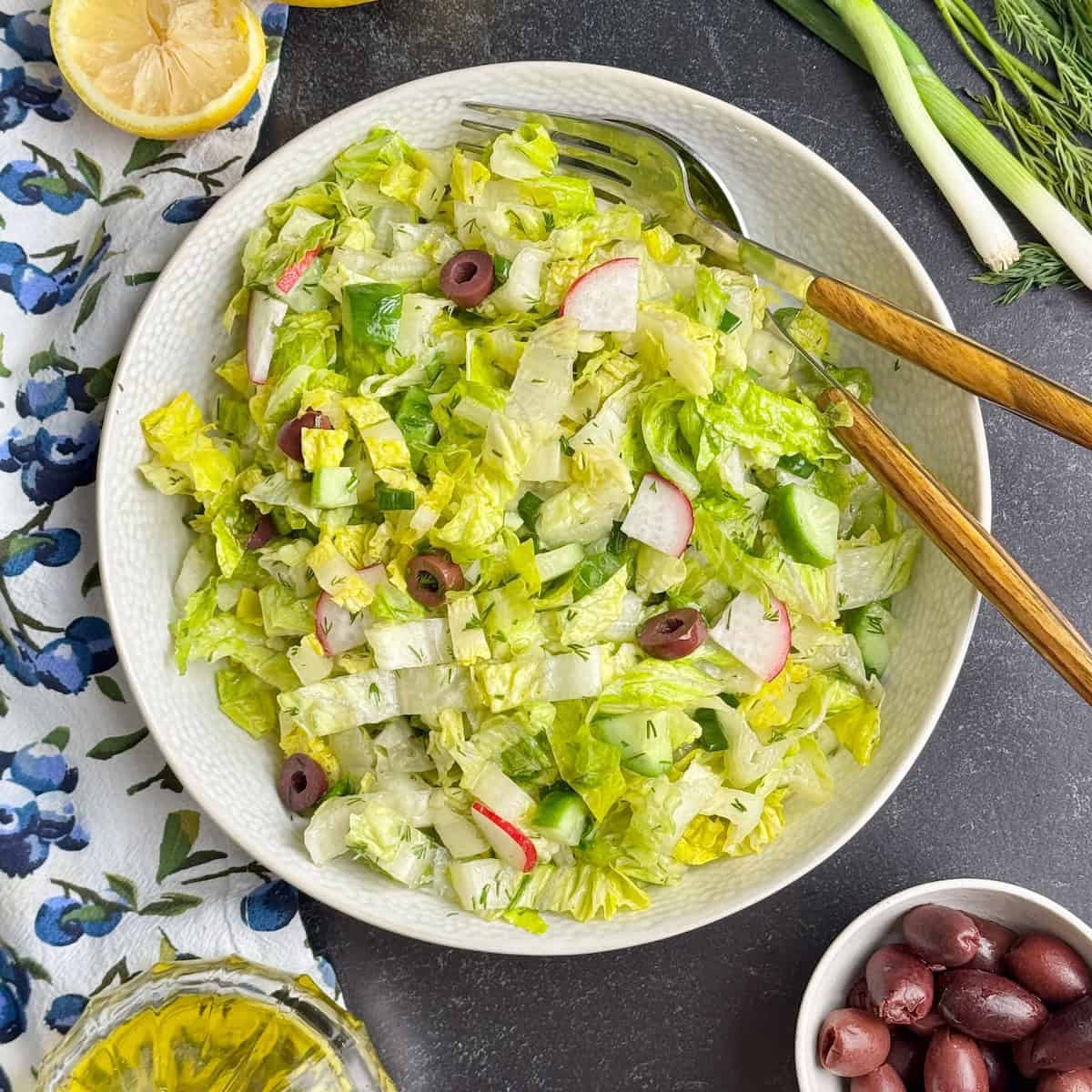
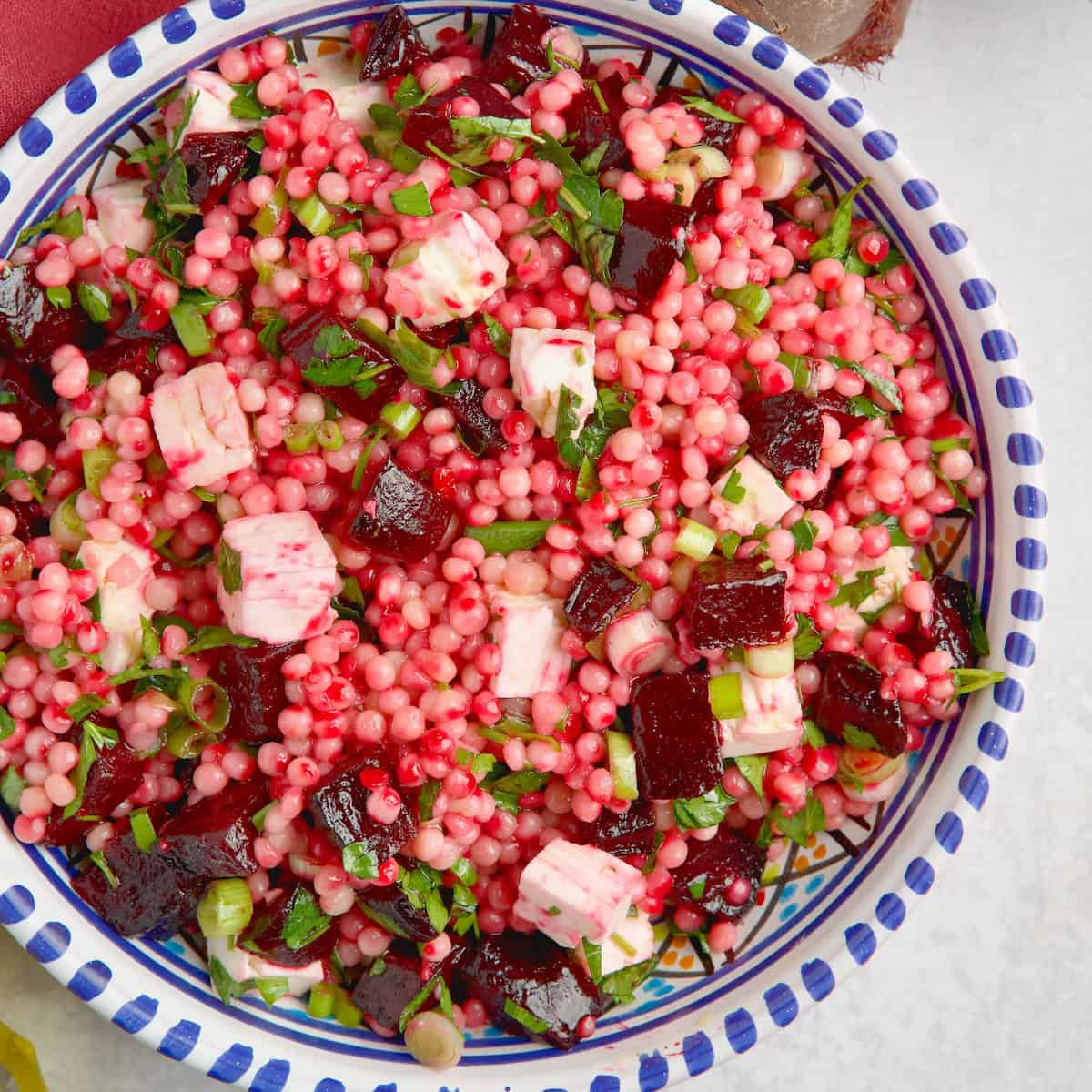
We love enjoying a slice of this Greek focaccia-style bread with a salad for lunch during the summer, when tomatoes are at their best. It’s quite filling and perfect to enjoy at home, or to pack up and take along to the beach or for a picnic in the park. You could pair it with a Greek salad or a couscous and halloumi salad.
Storage
If you have any leftover ladenia flatbread, store it in the fridge and enjoy it within 3–4 days. You can reheat it in the microwave (although it may become a little soft) or warm it in the oven or in a pan for a minute or two.
FAQ
Yes, you could use the same amount of all-purpose flour but the flatbread might be a little bit more dense.
Pair it With Recipes
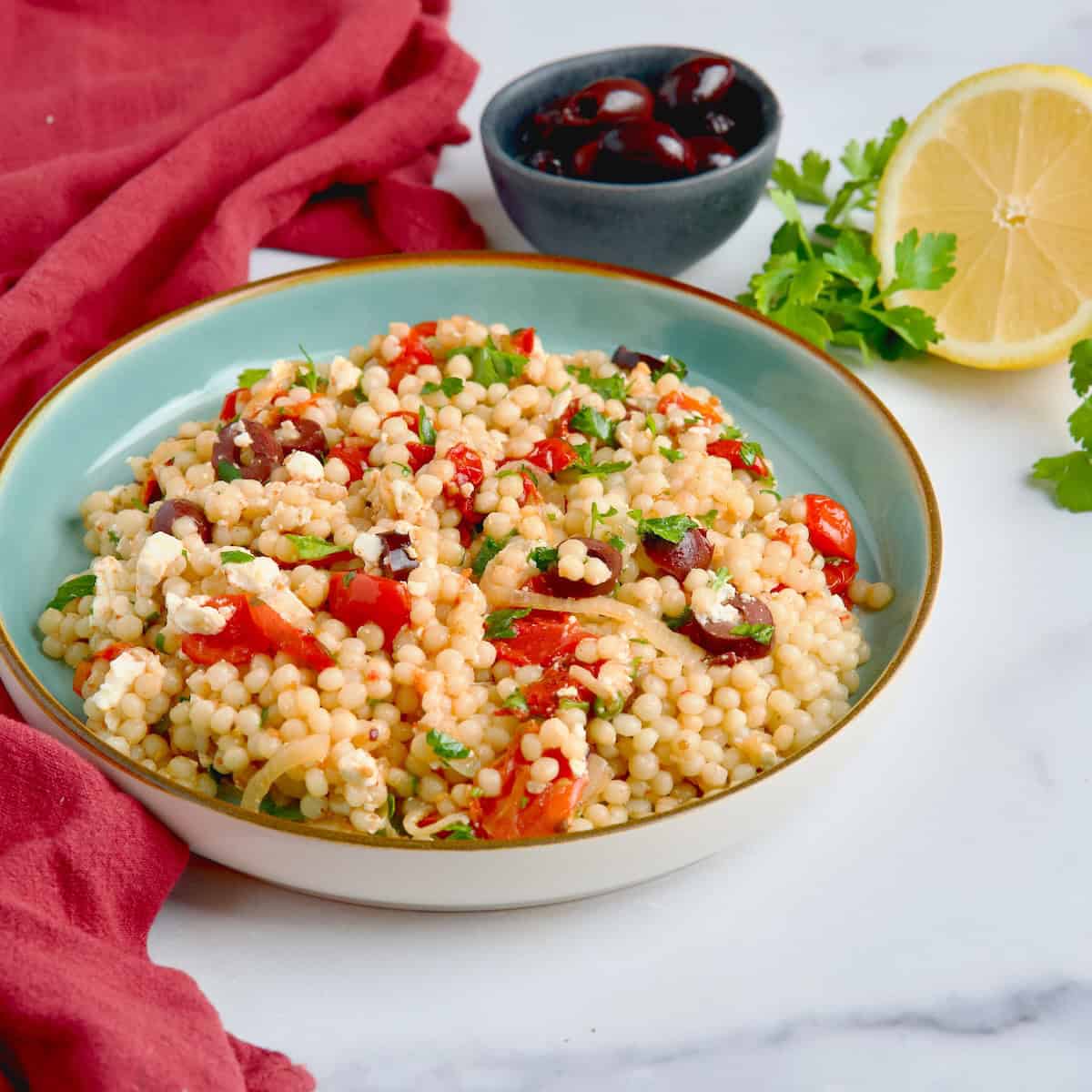
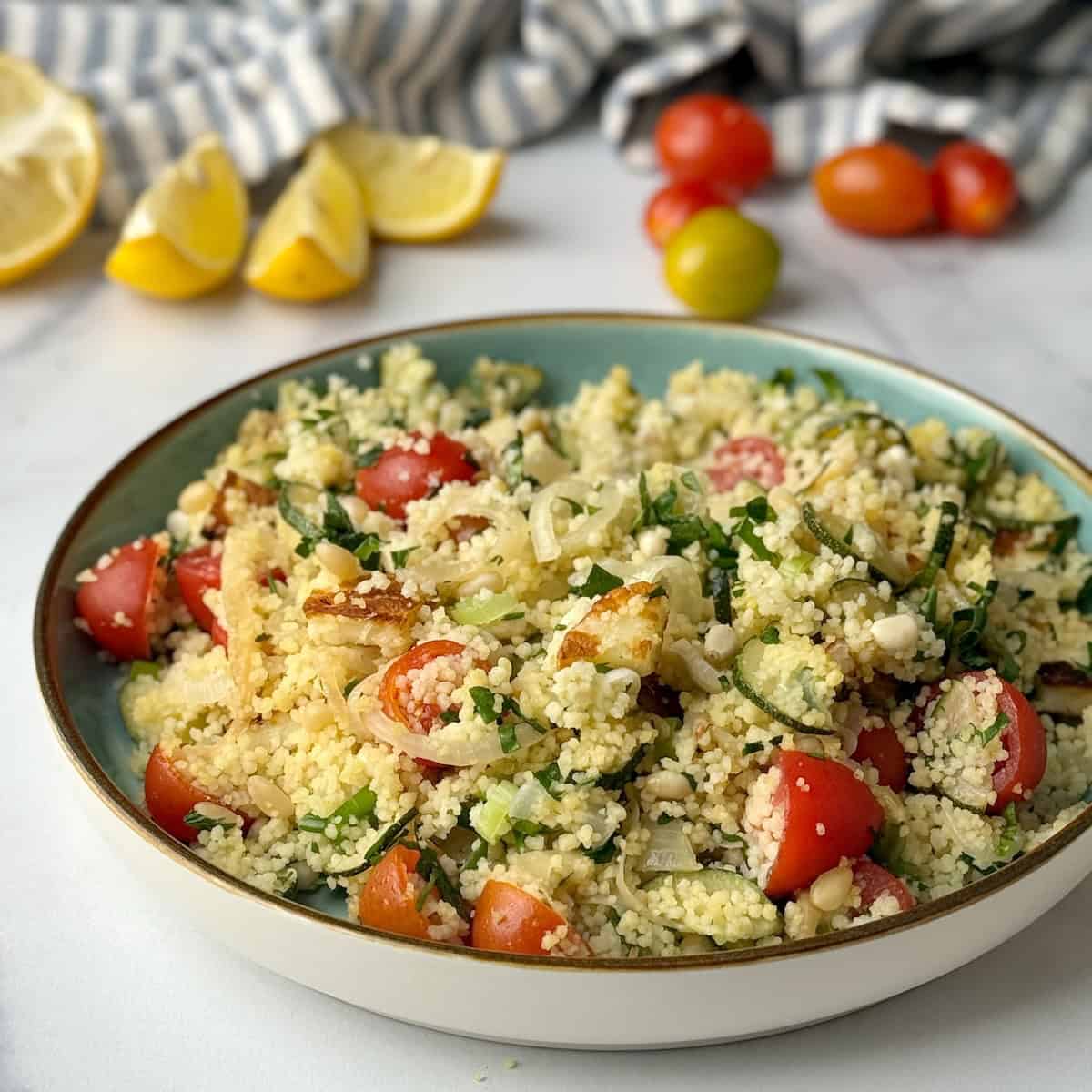
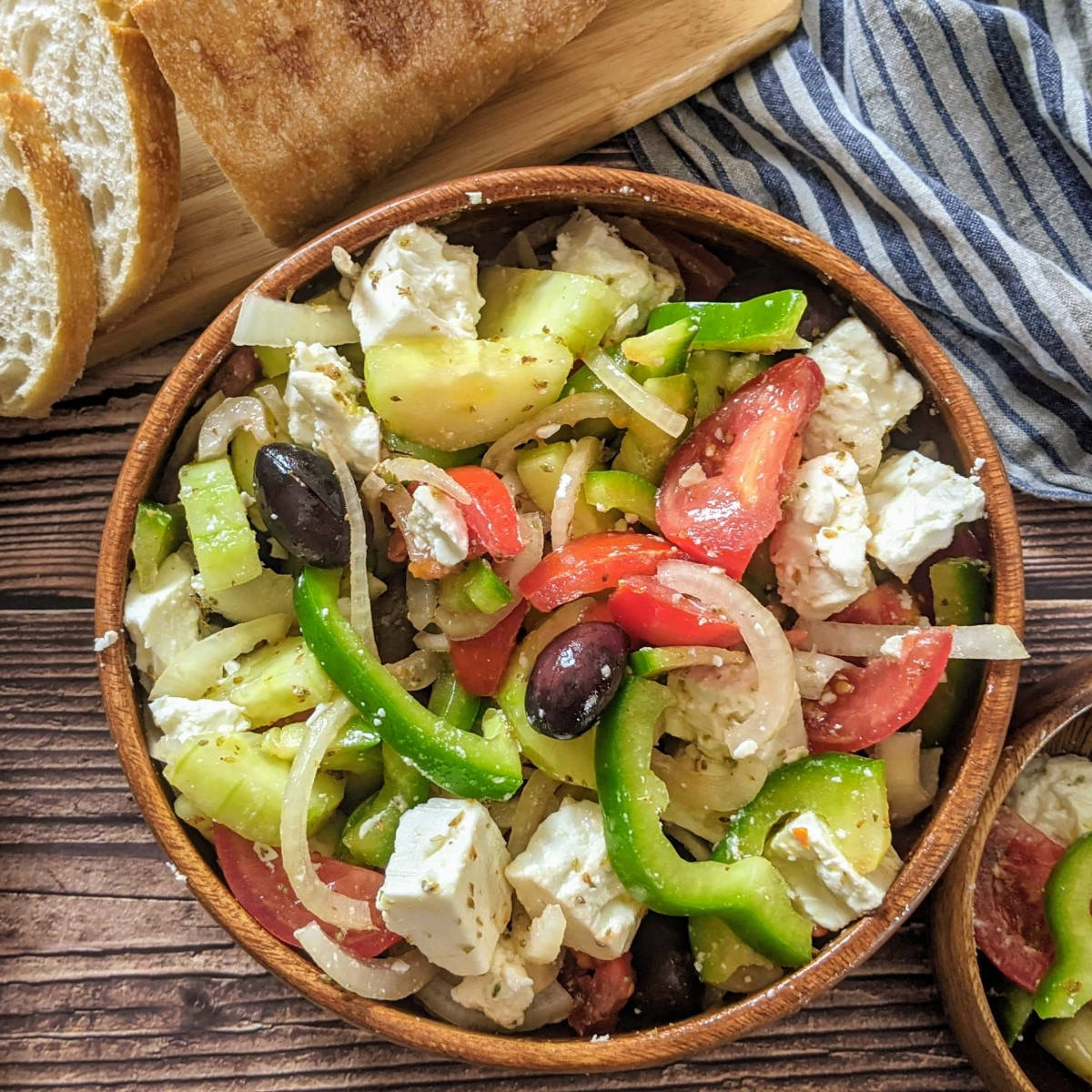
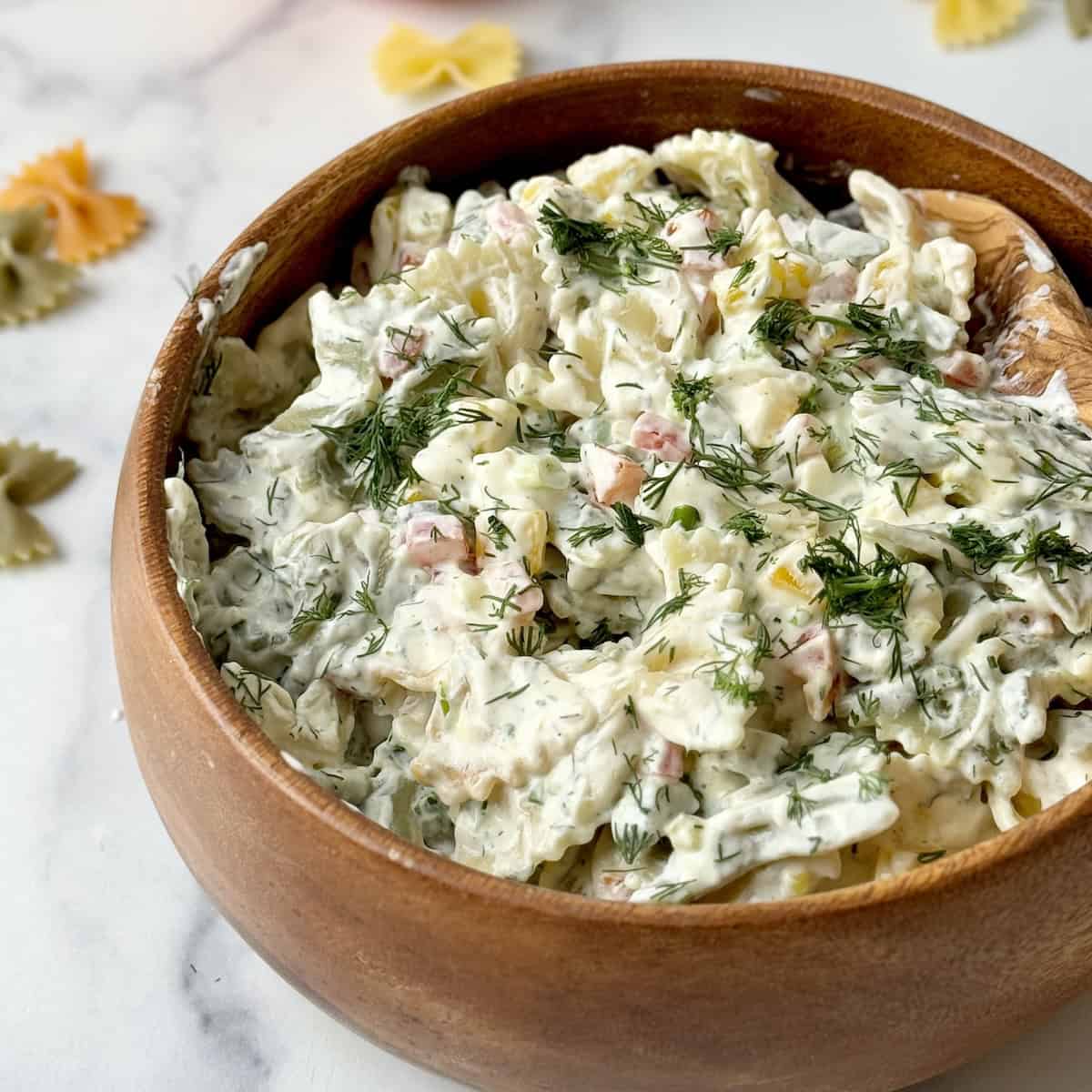
If you tried my Ladenia- Greek Flatbread With Tomatoes & Onions or any other recipe on my website, please leave a 🌟 star rating and let me know how it went in the 📝 comments below. I love hearing from you!
Recipe
Ladenia- Greek Flatbread With Tomatoes & Onions
A delicious Greek flatbread topped with heirloom tomatoes and onion slices, similar to focaccia. Ladenia has a soft, fluffy dough base and a wonderfully summery aroma from the tomatoes and oregano. Perfect for breakfast, a light lunch with a salad, or as a snack. Enjoy! 5.0 from 1 votes
12 slices
15 minutes
Dough Ingredients
- 3 cups / 375gr bread flour
- ¼ cup olive oil
- 2 ¼ teaspoons active dry yeast
- 1 teaspoon sugar
- 1 cup lukewarm water
- 1 teaspoon salt
Topping Ingredients
- 2-3 small tomatoes
- 1 small red onion
- 2 tablespoons tomato paste
- 1 tablespoon oregano
- ¼ cup olive oil
- 1 teaspoon salt
Equipment
- stainless steel baking pan (paid link)
Instructions
- In a bowl, add the lukewarm water, yeast and sugar. Mix to combine and cover with cling film. Rest for 10 minutes to activate the yeast.
- Add the flour, salt and olive oil to the bowl with the yeast. Knead by hand for 6-7 minutes or with a stand mixer using the hook attachment for 5-6 minutes in medium-low speed. If there is any flour left on the sides, use a spatula or dough scraper to push it down so it incorporates into the dough.
- Add a tablespoon of oil to the bottom of the boil and place the dough ball in. Cover with cling film and a tea towel. Rest for 1.5-2 hours in a warm corner of your kitchen.
- When the dough has doubled in size, gently press it down to deflate. Brush a 12×10-inch tray with oil, then transfer the dough to the tray and spread it out with your hands to cover the base evenly.
- Spread the tomato paste on top using the back of a spoon or a brush. Sprinkle some oregano and season with salt.
- Cut the onion and tomatoes into thin slices. Spread them on top of the tomato paste. Add a little bit more salt and oregano. Drizzle with the remaining oil.
- Bake the ladenia flatbread in a preheated oven to 400°F / 200C for 30-40 minutes until the edges are golden brown.
Notes
- You can use grape tomatoes instead of hierloom tomatoes.
- Remove from the tray to prevent the bottom from getting soggy.
- You could add more veggies to your preference like olives or peppers.
Storage
If you have any leftovers, store the flatbread in the fridge and consume within 3-4 days.
Nutrition Info (per serving)
I am not a nutritionist. The nutrition information has been calculated using an on-line calculator, and is intended for information and guidance purposes only. If the nutrition information is important to you, you should consider calculating it yourself, using your preferred tool.









Julia
I really loved creating this recipe and post for you; I hope you make it and enjoy it as much as I do. Please leave me a comment here and share your feedback with a star rating as well